Pinglu Canal Opens: What It Means for China–Southeast Asia Shipping
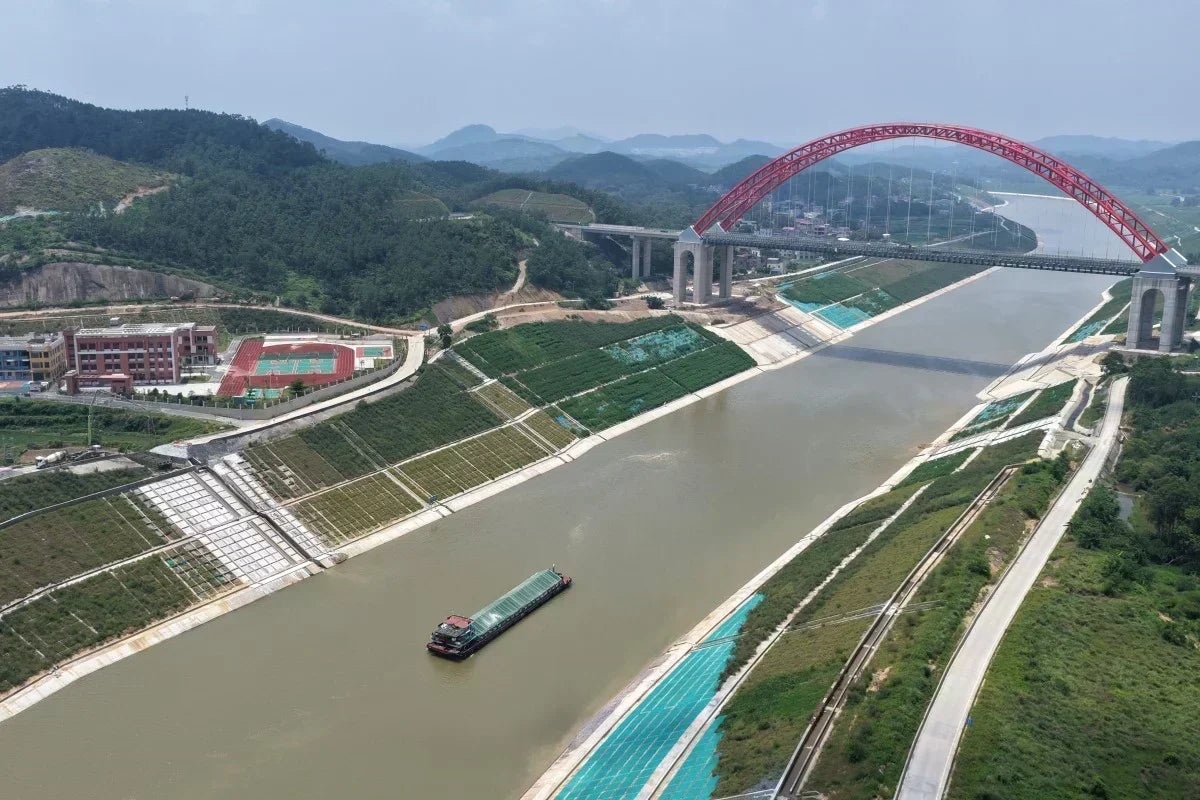
On September 16, 2026, the Pinglu Canal officially opened to navigation. On the same day, the new Nanning–Can Tho, Vietnam international shipping service began its maiden voyage, marking the start of a new waterborne connection between Southwest China and Southeast Asia. For the shipping industry, however, the significance goes beyond the opening of another canal. For the first time, vessels of up to around 5,000 DWT can use a new southbound waterway from Guangxi toward the Beibu Gulf, creating a more direct maritime gateway between China's inland southwest and ASEAN markets.
For shipowners, cargo owners and vessel investors, the key questions are therefore simple: What cargo will move through this corridor? What vessels will be needed? And where could new shipping demand emerge?
1. 560 km Shorter — A New Cargo Corridor
Before the Pinglu Canal, waterborne cargo from Southwest China largely followed the Xijiang and Pearl River systems eastward before reaching the sea around Guangdong. The new canal changes that geography.
Traditional route:Southwest China → Xijiang River → Pearl River Delta → Sea
New route:Southwest China → Nanning → Pinglu Canal → Beibu Gulf → Southeast Asia
The 134.2-kilometre canal shortens the inland waterway distance to the sea by more than 560 kilometres compared with the traditional route via Guangzhou. Official estimates suggest that overall logistics costs for relevant cargo flows could fall by approximately 18%–30%.

But the real impact is not simply a shorter voyage. It could change where cargo flows. On the canal's opening day, vessels carried cargoes including sugar, construction materials, minerals and steel toward the sea, while inbound vessels carried coal, iron ore, bauxite, fertilizer and stone into the Xijiang River basin.
For cargo owners in Southwest China, water transport may therefore become commercially viable for some cargoes that previously relied more heavily on road, rail or longer inland-waterway routes. And when cargo flows change, shipping demand eventually changes with them.
2. Why 5,000 DWT Matters to Shipowners
Global shipping has spent decades pursuing economies of scale. The opportunity created by the Pinglu Canal may be different. Rather than creating demand for larger deep-sea tonnage, the canal could support a regional market for smaller and more flexible vessels.
Potential vessel segments worth watching include:
-
3,000–5,000 DWT bulk carriers
-
General cargo vessels
-
Multipurpose vessels
-
Small container vessels
-
River-sea vessels

A cargo ship on the Beibu Gulf in southern China on Sep 19, 2026. (Photo: CNA/Lan Y)
One interesting example is Beigang Yunhe 001, a 5,000-tonne-class green demonstration vessel developed for the Pinglu Canal. The vessel is 89.9 metres long and can carry both bulk cargo and containers, with capacity for up to 207 TEU. It is also powered by LNG. Its design points toward an interesting vessel profile for the emerging market:
smaller tonnage + flexible cargo capability + river-sea access + lower operating costs.
This raises an important question for the S&P and chartering markets: Could the Pinglu Canal create a new niche market for small regional vessel assets?
It is still too early to answer definitively. But if regular cargo volumes develop between Southwest China, the Beibu Gulf and Southeast Asia, demand for suitable smaller vessels could become increasingly relevant — not only for operations, but eventually for chartering, second-hand vessel transactions and newbuilding investment.
3. Vietnam First, Southeast Asia Next
Vietnam is the most immediate international market to watch. The reason is straightforward: the Nanning–Can Tho international service is already operating. This means the route:
Southwest China → Pinglu Canal → Beibu Gulf → Vietnam
has already moved from infrastructure planning into actual shipping operations. The next question is how far this influence could spread.
-
Vietnam
Vietnam could become an early market for short-sea bulk, general cargo, container and river-sea services connected with Guangxi and Southwest China.
-
Thailand, Malaysia and Singapore
As cargo volumes through the Beibu Gulf increase, regional services and transshipment networks could strengthen connections with ports such as Laem Chabang, Port Klang and Singapore.
-
Indonesia and Wider ASEAN
For more distant markets, the opportunity may not necessarily involve 5,000-DWT vessels sailing directly through the canal. Instead, the network could look like this:
Southwest China → Pinglu Canal → Beibu Gulf → Regional Shipping Network → ASEAN
That distinction is important. The long-term value of the Pinglu Canal should not be measured only by how many vessels physically enter the canal. Its broader impact may come from bringing more cargo into the Beibu Gulf shipping network, which could then influence regional routes throughout Southeast Asia.

4. What Shipowners Should Watch Next
The Pinglu Canal is open. Now the market needs to prove itself.
For shipowners and vessel investors, five indicators may matter more than headline traffic numbers.
-
Cargo Volume: Will stable cargo flows develop?
-
Backhaul Cargo: Can sustainable two-way China–ASEAN trade develop?
-
Freight Rates: Will rates support regular services?
-
Vessel Type: Which vessels will prove most economical?
-
Asset Value: Could new demand emerge for chartering, S&P or newbuildings?
5. More Than a Canal
On a map, the Pinglu Canal is a 134.2-kilometre waterway connecting the Xijiang River system with the Beibu Gulf. From a shipping perspective, however, it connects something much larger. On one side lies the industrial and resource hinterland of Southwest China. On the other lies Vietnam, Southeast Asia and the wider international shipping network.
The canal's long-term importance may therefore be less about the 560 kilometres saved and more about what happens next:
Where will cargo move?
Which vessel types will carry it?
Which regional routes will become commercially viable?
And will this eventually create a new market for smaller vessel assets?
The Pinglu Canal is already open. The next chapter will be written by cargo flows, freight rates — and the vessels that serve them.
Looking for Vessels for China–Southeast Asia Trade?
As regional shipping patterns continue to develop, suitable tonnage may become increasingly important. Our team follows the Chinese vessel market, including bulk carriers, general cargo vessels, container vessels and other regional tonnage, and works with international buyers, shipowners and shipping companies on vessel sale and purchase opportunities.
If you are looking for suitable vessels or exploring opportunities in the China–Southeast Asia shipping market, contact our team to discuss current vessel availability.
( Key Words: Pinglu Canal, River-sea transportation, China-ASEAN shipping, Beibu Gulf, 5,000 DWT vessel, 3000–5000 DWT, shipowner, vessel sale & purchase, chartering market, short-sea shipping, regional feeder vessel, river-sea ship, New International Land-Sea Trade Corridor, cargo flow restructuring, Nanning–Can Tho route, RCEP)