Secondhand Tanker Demand Is Up 53%: Why Are Buyers Paying Newbuild Prices for Used Ships?
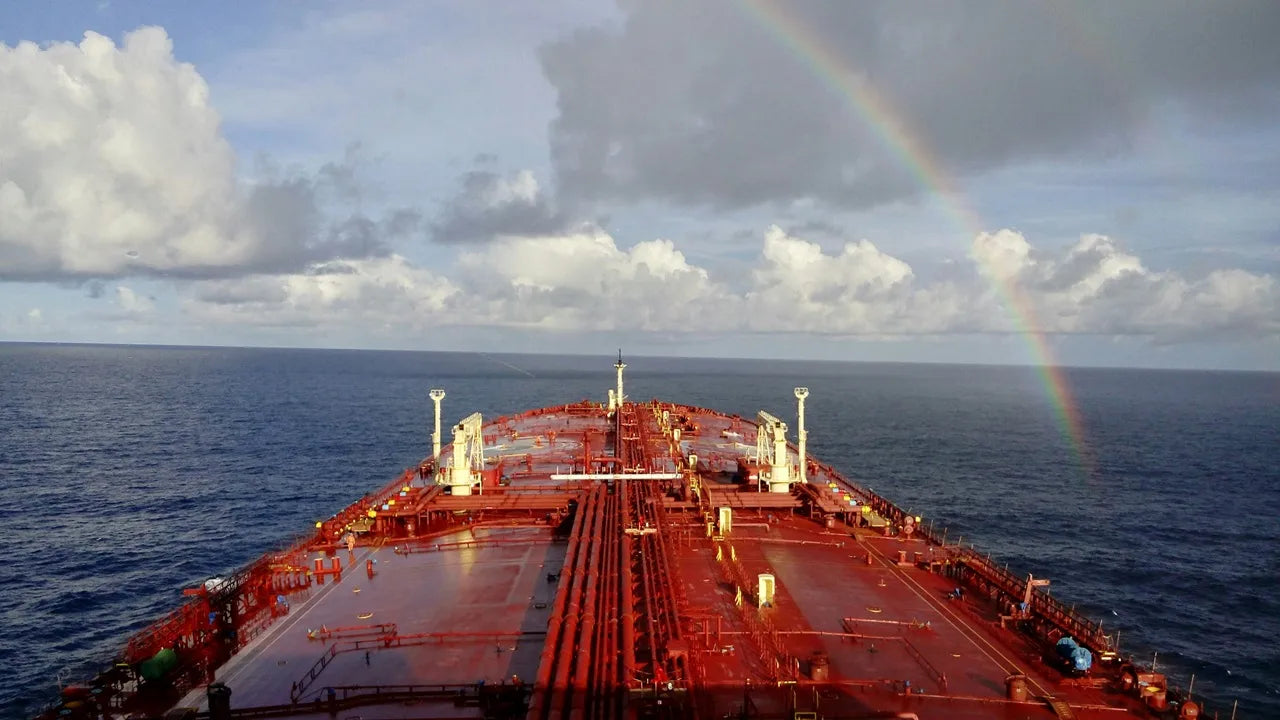
The secondhand tanker market is running hotter than it has in years, with sales up more than 50% on last year. The standout buyer is South Korea's Sinokor Maritime, which has taken 73 VLCCs (very large crude carriers) off the market for close to $6 billion — roughly what the next eight largest tanker buyers spent combined. Prices have followed. A secondhand VLCC now costs about as much as building a new one.
Three things call for a cooler look: VLCC prices are at their highest since 2008, more than half of all deals involve vessels over 16 years old, and the buyer is undisclosed in nearly half of transactions.
1. How hot is the market
Start with the headline number. According to shipbroker Xclusiv, 365 secondhand tankers changed hands between January and July 2026, up 53% from 239 in the same period of 2025.
A jump of more than half would be unusual in any asset class. And this is not one segment running hot — volumes are up across the board, from the largest crude carriers to the mid-size product tankers that work regional routes.
Put simply: everyone is chasing tonnage.
The reason is not hard to follow. Conditions in the Middle East have made the main trading routes unpredictable, and owners and charterers are redoing their maths. Voyages that used to run direct now detour. Fleets that used to be sufficient no longer are. The extra tonnage has to come from somewhere, and the secondhand market is where it is closest to hand.
2. Who's buying: one owner's 73 VLCCs

One buyer dominates this cycle. Sinokor Maritime of South Korea has bought 73 VLCCs this year, spending close to $6 billion.
-
To put that in perspective: according to shipping analytics firm Veson Nautical, that $6 billion is roughly what the next eight largest tanker buyers in the world spent combined. Add up buyers two through nine, and you barely match this one.
-
Where the money comes from. Mediterranean Shipping Company (MSC), the world's largest shipowner, acquired a 50% stake in Sinokor earlier this year, funding the buying programme.
-
What it has bought them. According to Clarksons data, Sinokor now controls 93 VLCCs and a tanker fleet of 162 vessels, making it the largest tanker operator in the world by fleet size.
This cuts both ways. A buyer of this size keeps liquidity high and makes life easier for sellers. But with so much of the demand resting on one name, the market's biggest source of support disappears the moment that buyer slows down.
3. Where prices stand: a used ship nearly costs as much as a new one
One comparison tells the story better than any index. From Frontline plc's second-quarter 2026 results (publicly filed with the US Securities and Exchange Commission): the company sold two 2017-built VLCCs for a total of $270 million — about $135 million each. Over the same period it bought nine newbuild scrubber-fitted VLCCs for $1,224 million — about $136 million each.
That is not how this market normally works. A vessel with nine years behind it should trade at a clear discount to a newbuilding. Trading level with one tells you just how scarce available tonnage has become.
Veson Nautical puts it plainly: VLCC prices have reached their highest level since 2008.
The charter market says something similar. In January, one-year time charters for VLCCs were fixing at an average of about $76,900 per day. By May, the same one-year cover was going at $120,000 per day. Charterers paying that much to lock in tonnage in advance are telling you they do not expect high rates to end soon.
The catch: the same analysts add a note of caution. From this level, the more likely path is a plateau rather than further acceleration.
4. Why older vessels are suddenly in demand
Here is something that looks contradictory: more than half of all deals — 57% — involve vessels over 16 years old.
At a time when environmental rules keep tightening, why is anyone buying ships that old? Three reasons, all practical.
First, there genuinely aren't enough ships. When routes are disrupted, voyages get longer, detours multiply and waiting time rises. Moving the same cargo takes more vessels. The capacity shortfall is real.
Second, newbuildings aren't available. Delivery slots for the main tanker sizes are generally booked into 2028 and beyond. That does not help anyone who needs tonnage now. The secondhand market is the only option.
Third, high freight rates cover an old ship's shortcomings. Older vessels burn more fuel, need more maintenance and cost more to insure. At today's earnings, those costs are absorbed. The problem is that once rates fall, they stop being absorbed.
In short: the rush into older tonnage is not a vote of confidence in old ships. It reflects a market where having a vessel at all matters more than having a good one.

5. Five things worth watching
-
Prices are high. VLCC values sit at their highest since 2008, and analysts expect a plateau rather than continued gains. The margin of safety today is far thinner than it was a year ago.
-
Demand is concentrated. One owner's spending matches that of the next eight buyers combined. That is what makes the market lively — and it is also the risk. If that buyer steps back, the largest bid goes with it.
-
You may not know who you're dealing with. Of the 365 vessels sold this year, 171 — close to half — went to undisclosed buyers. An enquiry from an unnamed counterparty is not an exception in this market; it is the norm. Background checks cannot be skipped.
-
Older vessels carry three burdens. Detention by port State control, rising insurance costs, and environmental compliance. All three grow with age, and none of them care what you paid.
-
Slow to rise, quick to fall. This cycle is supported by geopolitics. Tension pushes rates and asset values up, and the market has priced that in. But if conditions ease, capacity comes back and rates come down considerably faster than cargo volumes recover. The structure today is slow to rise, quick to fall.
VesselsLink Is Your Full-Cycle Partner
We provide professional services for your diverse needs:
-
Custom new ship construction
-
Compliance retrofitting for existing fleets
-
Cost-effective second-hand vessel trading
Get access to first-hand industrial resources via our platform, together with transparent quotations, professional project execution and full after-sales support. We offer professional trading assistance and in-depth market insights.
( keywords: secondhand tanker market, secondhand VLCC, VLCC prices, tanker demand, tanker sales, used tanker ships, newbuild vs secondhand, Sinokor Maritime, VLCC buyer, tanker market 2026, tanker fleet, time charter rates, older vessels, aged tankers, undisclosed buyers, tanker tonnage)