Why China-Indonesia Nickel Resource Policy Disputes Won’t Stop Growth of Cross-Border Shipping Routes
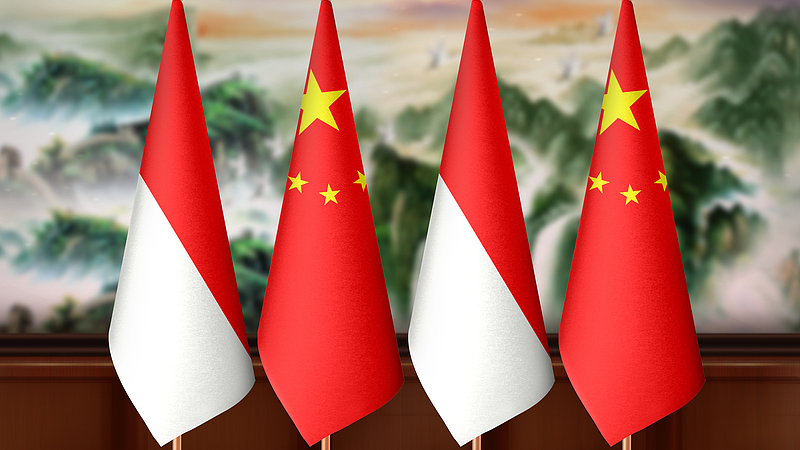
In 2026, Indonesia intensively rolled out mineral resource control policies
$167.5B
2025 China-Indonesia bilateral trade (USD)
-30%
2026 Indonesia nickel quota cut
+33%
2026 Q1 nickel ore shipping volume YoY growth
1. Changes in Resource & Industrial Policies of Indonesia and Their Market Impacts
1.1 Nickel Quota Slashed: From 379 Million Tons to 250 Million Tons
In early 2026, Indonesia's Ministry of Energy and Mineral Resources locked the national annual nickel mining quota at 250 to 260 million tons, down from 379 million tons in 2025 — a reduction exceeding 30%. In addition, the quota approval cycle was shifted from a three-year term to annual review, leading to more frequent adjustments to industrial policies.
The Weda Bay mine cluster, where Chinese enterprises are heavily concentrated, recorded a sharp quota reduction — its annual quota was slashed from 42 million tons to 12 million tons, a drop exceeding 71%.
1.2 Coal Production Cuts and Export Nationalization
Indonesia's coal sector also saw corresponding industrial regulation adjustments. The 2026 production quota has been cut from the 2025 actual output of 790 million tons to approximately 600 million tons, a reduction of roughly 24%. The Domestic Market Obligation (DMO) ratio has been raised from 25% to 30%, requiring coal companies to supply 30% of their output to the domestic market at discounted prices.
More significantly, on June 1, 2026, Indonesia established the state-owned enterprise PT Danantara Sumber Daya Indonesia as the sole exporter of strategic resources including coal. A transition period runs through August 31, with all export operations transferring exclusively to this SOE from September 1 — private enterprises are no longer permitted to export directly. The Indonesian government claims that between 1991 and 2024, the country lost approximately $908 billion in revenue due to commodity "under-invoicing."

Direct Impact on Shipping Markets
Indonesia is one of the world's largest thermal coal exporters, and China is a major buyer. The compression of coal export volumes will directly reduce related bulker voyage demand. On the other hand, Indonesian smelters facing nickel ore shortages are importing from the Philippines (6.02 million tons imported from January to May 2026, up 116.8% year-on-year). This "substitution procurement" is actually increasing short-haul regional bulk transport demand, creating a favorable environment for bulk carriers.
2. Carrier Response: 2026 New China-Indonesia Routes Launched at Scale
Despite evident differences in industrial interest allocation between China and Indonesia, numerous international shipping lines have actively launched a flurry of new direct China-Indonesia services in 2026. Behind this apparent paradox lies the deep interdependence of the two economies and sustained trade volume growth.

2.1 Overview of New China-Indonesia Routes Launched by Major Carriers
| Carrier | Service Name | Port Rotation | Notable Features | Launch Date |
| OOCL | CIS1 | Shanghai – Ningbo – Jakarta | East China direct, premium transit time | April 2026 |
| OOCL | CIS3 | Xiamen – Nansha – Jakarta – Surabaya – Yantian – Xiamen | Three South China hubs, dual coverage | May 2026 |
| MSC | FIREHORSE | Shanghai – Ningbo – Singapore – Surabaya – Semarang – Singapore – Shanghai | China-Singapore-Indonesia direct link | March 2026 |
| COSCO Shipping | TNC | Xiaochandao – Nansha – Semarang – Xiaochandao | Nansha to Semarang direct, 8 days | April 2026 |
| ZIM + Sea Consortium | SCJX | Xiamen – Nansha – Jakarta – Surabaya – Yantian – Xiamen | Weekly service, 3 container vessels | 2026 |
| X-Press Feeders + Gold Star Line | SCJX | Xiamen – Nansha – Jakarta – Surabaya – Yantian | 2,400-2,900 TEU, weekly | May 2026 |
2.2 Why Are Carriers Doubling Down on China-Indonesia Routes?
The proactive launch of new routes is based on several strategic judgments:
First, the trade foundation remains solid. China-Indonesia bilateral trade reached a historic $167.49 billion in 2025, with China serving as Indonesia's largest trading partner for 13 consecutive years. Chinese direct investment in Indonesia reached $7.5 billion, ranking among the top foreign investors for many years. Even amid policy friction, total trade volumes remain enormous.
Second, tariff reductions under RCEP continue to produce effects. Indonesia's investment boom in nickel processing, EV batteries, and infrastructure is driving large-scale exports of Chinese equipment and raw materials. OOCL's launch of two Indonesia-bound services within a single month is a direct response to this trend.
Third, Southeast Asian short-sea routes are less affected by Middle East turmoil. While Middle East tensions have strained some deep-sea capacity, Southeast Asian feeder routes have been relatively insulated, making them a "safe haven" that liner companies are prioritizing for network expansion.
Fourth, backhaul cargo potential is substantial. Indonesia's exports of palm oil, rubber, tropical fruit, and other resource-based products, alongside backhaul demand for nickel and coal commodities, have the potential to form a "heavy in, heavy out" virtuous cycle with headhaul cargoes.
3. China-Indonesia Route Capacity Demand
3.1 Nickel Ore Trade Is Driving Bulker Demand
Indonesia is the world's largest nickel ore supplier, providing 65% to 67% of global supply in 2025. Nickel ore seaborne volume surged 33% year-on-year in Q1 2026 to nearly 9 million tons. This growth is driven by two factors:
First, import substitution demand from Indonesia's own smelting capacity expansion — while sitting on the world's largest nickel reserves, Indonesian smelters are now buying ore from the Philippines. From January to May 2026, Indonesia imported approximately 6.02 million tons of nickel ore and concentrates from the Philippines, up 116.8% from 2.78 million tons in the same period last year. This "Philippines-Indonesia" short-haul transport route is exactly the bread and butter of bulk carriers.
Second, sustained Chinese demand for nickel products. Although Indonesia has tightened raw ore exports, processed products such as nickel pig iron and stainless steel are still exported in large volumes to China, generating backhaul cargo on China-Indonesia routes.
3.2 Impact of Coal Trade Changes on Shipping
Indonesia is the world's largest thermal coal exporter, with China as a major buyer. The 2026 coal production quota compression to 600 million tons and the DMO increase to 30% mean that exportable coal volumes may decline.
However, the reduction in coal trade is partially offset by the following factors:
-
Coking coal demand growth driven by domestic Indonesian smelting capacity expansion
-
Chinese buyers shifting to alternative sources such as Australia, Russia, and South Africa, where longer voyage distances actually increase tonne-mile demand
-
Coal prices potentially rising, indirectly supporting freight rates
4. Future of China-Indonesia Relations: Cooperation Prospects and Development Trends

Djauhari Oratmangun, Indonesian Ambassador to China (center), takes a group photo with Chinese business representatives at the Indonesia-China Partnership Forum in Jakarta on July 23, 2026. (ANTARA)
4.1 The Cooperation Foundation: Inseparable Industrial Interdependence
Despite escalating resource maneuvering, the "foundation" of China-Indonesia cooperation remains solid. Here are the core data points supporting long-term cooperation:
13 years
China as Indonesia's largest trading partner
$7.5B
2025 Chinese FDI in Indonesia
16.58M
Jakarta-Bandung HSR total passengers
55.6%
ASEAN respondents expecting improved China relations
Indonesia's "Golden Indonesia 2045" vision is deeply aligned with China's Belt and Road Initiative. In September 2025, the two heads of state met and established a direction of deepening all-dimensional strategic coordination. The Jakarta-Bandung high-speed railway has now operated safely for 1,000 days, carrying over 16.58 million passengers with an on-time rate of 99.8% — becoming a "gold-standard calling card" for bilateral cooperation.
4.2 Institutional Cooperation Safeguards Under the RCEP
Since entering into force four years ago, RCEP has made significant progress in promoting regional economic integration. Indonesian scholars note that RCEP provides Indonesia with institutional space to strengthen constructive engagement with China, allowing it to reap economic benefits without compromising its strategic autonomy. The bilateral relationship is gradually evolving from a transactional partnership toward a structural strategic partnership based on multilateralism and mutual respect.
On July 23, 2026, Indonesia completed the pricing of its inaugural sovereign Panda bond — a total size of RMB 7 billion, with coupon rates of just 1.90% (3-year) and 2.19% (5-year), and oversubscription exceeding 2.4 times. A country tightening resource exports while securing extremely low-cost RMB financing from the Chinese market is itself the best proof of deepening bilateral financial cooperation.
4.3 "Two Countries, Twin Parks": A New Model of Deep Integration
The China-Indonesia "Two Countries, Twin Parks" project has now formed 73 bilateral economic and trade cooperation projects with total investment exceeding RMB 93 billion, spanning marine fisheries, light industry and textiles, machinery and electronics, and green mining. This "Two Countries, Twin Factories" model — locating processing operations in Indonesia while retaining high-value and advanced processing stages domestically — both satisfies Indonesia's industrial localization demands and mitigates the impact of export controls.
CATL's joint venture with Indonesian SOEs on a total project investment of approximately $6 billion for an EV battery ecosystem project broke ground in July 2025, covering the full chain from laterite nickel mining and smelting to battery materials and cell manufacturing. Chinese automakers including SAIC-GM-Wuling, BYD, and Chery have all set up or expanded factory operations in Indonesia.
5. Balanced Win-Win Development Amid Industrial Interest Adjustments
China-Indonesia cooperation has two sides: one is the solid strategic trust and inseparable industrial interdependence at the official level — this is the 'foundation' of cooperation that ensures neither side will easily flip the table; the other is the routine game-playing between a resource nation entering maturity and foreign capital over industrial chain profit distribution, where localized friction and growing pains are testing the resilience of cooperation.
Navigating China-Indonesia Routes — VesselsLink Is Your Full-Cycle Partner
We provide professional services for your diverse needs:
-
Custom new ship construction
-
Compliance retrofitting for existing fleets
-
Cost-effective second-hand vessel trading
Get access to first-hand industrial resources via our platform, together with transparent quotations, professional project execution and full after-sales support. We offer professional trading assistance and in-depth market insights.
( Keywords: China-Indonesia Trade, Secondhand Ship Trading, Bulker Investment, China-Indonesia Routes, Nickel Ore Trade, Indonesia Nickel Policy, Shipping Market Analysis, Secondhand Ship Market, Shipowner Investment, Belt and Road, RCEP, Indonesia Coal Export, China-Indonesia Relations, Ship Purchase & Sale)