Escalating US‑Israel‑Iran Conflict: Freight & Oil Prices Spiral, Shipping Industry Under Unprecedented Pressure
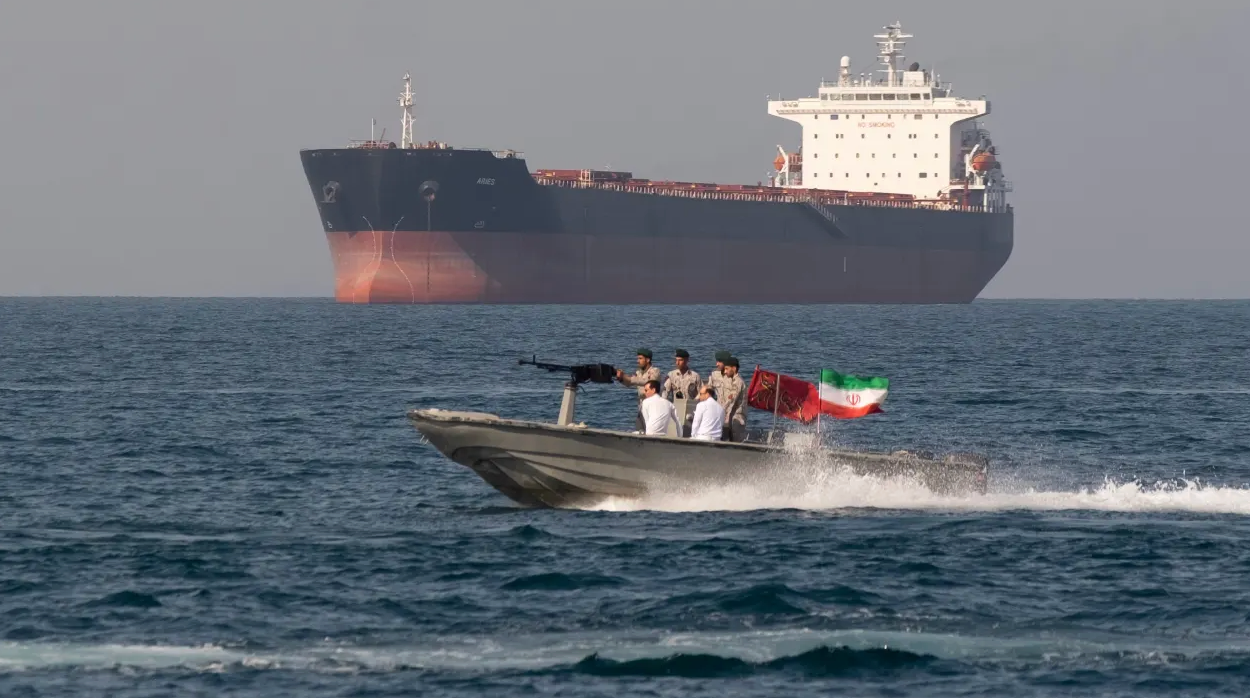
In recent times, the sharp escalation of geopolitical tensions and growing security instability in the Middle East have severely disrupted key global waterways such as the Strait of Hormuz and the Red Sea, delivering heavy shocks to international oil shipping, container shipping, and dry bulk markets. Approximately 11% of global maritime trade and 34% of oil export routes are at risk of disruption. Governments of multiple countries have issued navigation warnings, and major shipping enterprises have collectively suspended voyages, rerouted vessels and halted bookings, pushing the shipping market into a "crisis mode".
I. Blockade of the Strait of Hormuz: A Existential Crisis for Global Energy Shipping

Located between Oman and Iran, the Strait of Hormuz links the Persian Gulf, the Gulf of Oman and the Arabian Sea. Deep and wide enough to accommodate the world's largest crude oil tankers, it handles 20% of the world's oil transportation, 30% of global seaborne crude oil trade and 20% of the world's LNG trade, serving as the sole export route for Middle East energy.

Data Source: U.S. Energy Information Administration (EIA), Short-Term Energy Outlook, June 2025; EIA analysis based on Vortexa tanker tracking data.
-
In the first quarter of 2025, oil flows through the strait stood at approximately 20.1 million barrels per day, accounting for about 26.6% of global seaborne oil trade (75.7 million barrels per day), making it a core chokepoint for global energy transportation.
-
A prolonged blockade would lead to supply shortfalls for major Asian oil-importing countries.
-
Oil tankers are forced to take long detours, further driving up charter rates and fuel costs.
-
Jebel Ali Port, a core hub in the Middle East, has suspended operations, paralyzing the regional distribution network and triggering severe risks of cargo and container detention at ports.
II. Shipping Capacity and Routes: Detouring the Cape of Good Hope, a Sharp Drop in Effective Capacity

To avoid risks, mainstream shipping routes have been forced to restructure:
-
The Red Sea-Suez Canal route has been fully suspended, with no clear timeline for resumption.
-
Vessels transiting the Strait of Hormuz have suspended voyages, sought safe havens or been stranded, with more than 200 ships waiting in the adjacent waters.
-
All major Asia-Europe routes have been rerouted around the Cape of Good Hope, adding 10-15 days to the voyage and increasing the cost per voyage by approximately 400,000 US dollars.
-
The extended routes have directly caused a 15%-20% drop in effective shipping capacity, leading to widespread voyage delays and hindered empty container repositioning.
III. Shipping Freight Rates: Soaring Oil Shipping Rates, A Follow-up Rise in Container Shipping Rates and a "Violent Surge" in LNG Shipping Rates
The current impact has presented a pattern where oil shipping is the most sensitive, LNG shipping rates show the greatest elasticity, container shipping follows closely, and dry bulk shipping remains relatively buffered.
-
Oil shipping market: The daily charter rate for VLCC supertankers has exceeded 200,000 US dollars, hitting a six-year high, and the freight rate for the Middle East-China route has jumped by more than 40% in the short term.
-
Following Qatar's production halt, the daily freight rate for LNG carriers has risen by more than 40%.
-
Container shipping market: Freight rates for the Asia-Europe route have risen by 30%-50% in the short term, with even higher increases on some routes.
IV. Rising Oil Prices: Adding Further Pressure to Shipping Costs

Data Source: Bloomberg. Last update: 2 Mar, 09:46 GMT.
Note: Axis values do not start at zero.
-
Global benchmark Brent crude oil hit 82 US dollars per barrel (61 British pounds) on Monday, after at least three ships were attacked near the Strait of Hormuz over the weekend.
-
In Saudi Arabia, Saudi Aramco temporarily shut down its major refinery at Ras Tanura on the coast following a drone attack.
-
Institutions including Goldman Sachs and JPMorgan Chase have issued a joint warning: if the strait is blockaded for a long time, oil prices will quickly break through 100 US dollars per barrel, and may even hit 120 US dollars in extreme cases.
V. Shipping Insurance Premiums & War Risk Surcharges: A Double Blow of Skyrocketing Prices and Coverage Withdrawal, Total Loss of Control Over Shipping Costs
After the escalation of the US-Israeli conflict, the Strait of Hormuz and the Red Sea have been classified as the highest-risk areas by the international insurance market, leading to the most rapid repricing of global shipping insurance in history. War risk premiums have surged in a single day, and many international insurance institutions have directly withdrawn coverage, leaving shipowners and cargo owners in a desperate situation where "they dare not sail without insurance, and cannot afford the premiums even with insurance options".
-
War risk premiums have risen by 50% overall, with even higher increases in some high-risk areas. For a VLCC worth 100 million US dollars, the premium per voyage has jumped from 250,000 US dollars to 375,000-500,000 US dollars.
-
Top global insurance institutions have collectively withdrawn coverage. Leading international marine insurers including Lloyd's of London, Gard, Skuld, NorthStandard and the American Club have jointly announced the cancellation of war risk coverage for Iranian waters, the Persian Gulf and the Strait of Hormuz effective March 5, 2026.
-
Shipping companies have intensively imposed war risk surcharges and emergency conflict surcharges, passing the costs directly to cargo owners. Marine cargo war risk rates have risen by 30%-100% in tandem. Additional risk surcharges are levied at high-risk ports (Jebel Ali, Dubai, Bandar Abbas, etc.). Insurance companies have added exclusion clauses, refusing compensation for damages caused by missile attacks, detentions, strandings, port closures and other incidents.
VI. Latest Directives from Major Shipping Companies and Governments (as of March 3, 2026)
-
CMA CGM: Instructed all vessels to seek nearby safe havens and imposed emergency conflict surcharges.
-
Hapag-Lloyd: Suspended vessel passage through the strait and imposed war risk surcharges.
-
Japan's top three shipping companies: Fully suspended voyages in the Persian Gulf region.
-
COSCO Shipping: Ordered in-transit vessels to slow down and monitor the situation, strictly controlled new bookings to the Middle East, and evaluated alternative unloading plans in Oman.
-
US/EU/Greece: Issued the highest-level navigation warnings, prohibiting merchant ships from entering high-risk waters.

A commercial vessel anchors off the coast of Dubai, UAE, on March 2, 2026, amid ongoing navigational disruptions in the Strait of Hormuz.
Credit: VCG
In the short term, as long as the conflict does not de-escalate, high freight rates, route detours and exorbitant insurance premiums will become the new normal. If the Strait of Hormuz is subject to long-term restrictions, the global energy trade flow and shipping pattern will be completely rewritten, LNG trade routes will be forced to restructure, and the regional supply and demand pattern will undergo fundamental changes. Meanwhile, the sustained high oil prices will further solidify the high-cost pattern of the shipping industry. The medium and long-term impacts will depend on the duration of the conflict, the resumption of navigation in the strait, the production increase efforts of OPEC+, as well as the capacity recovery progress of LNG-producing countries such as Qatar.
( Keywords: Middle East shipping crisis 2026, Strait of Hormuz blockade impact, Red Sea route disruption, global energy shipping risk, VLCC tanker freight rate surge, LNG shipping rate volatility, Cape of Good Hope rerouting cost, maritime war risk premium spike, global container shipping disruption, Middle East port operation suspension)