Hainan Free Trade Port Customs Closure Takes Effect: Reshaping Asia's Economic and Trade Landscape, Revealing Strengths Through Multidimensional Comparisons
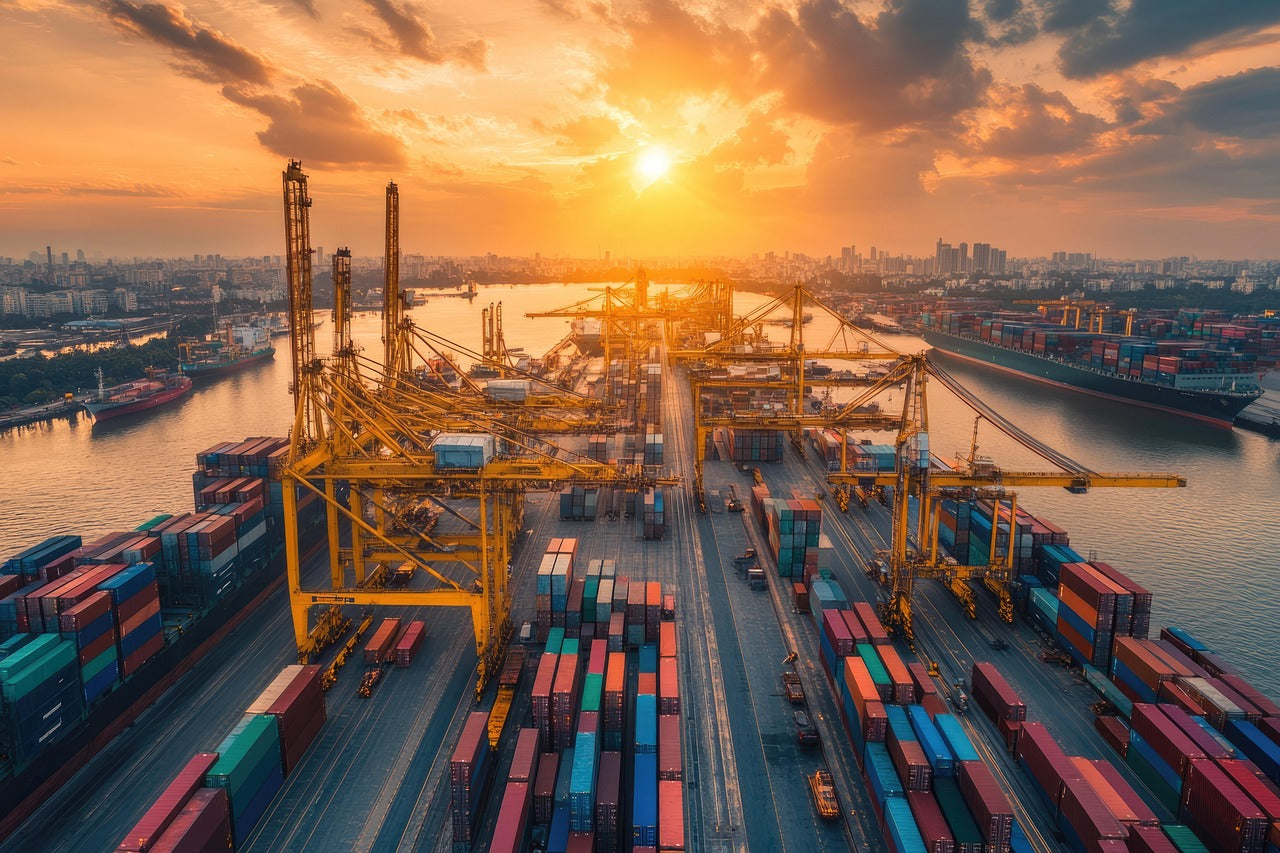
On December 18, 2025, the Hainan Free Trade Port (FTP) officially launched full-island customs closure operations, with the comprehensive implementation of the special supervision system featuring "eased access at the first line, controlled access at the second line, and free flow within the island." This institutional innovation, covering zero tariffs on 6,637 commodity items and a low 15% tax rate, not only marks a new phase in China's high-level opening-up but also exerts a profound impact on the Asia-Pacific trade pattern—particularly affecting the shipping hub status of the Strait of Malacca and Singapore's regional economic role.
Core Practices Comparison of Chinese and Foreign Free Trade Ports: Hainan's Characteristics Highlighted Amid Differences
Mature free trade ports worldwide are built around the core framework of "within the territory but outside the customs territory," yet distinct development paths have emerged based on geographical and positioning differences. Comparing international experiences with China's previous explorations, the uniqueness of Hainan's customs closure model is clearly evident:
-
Internationally, Singapore's FTP leverages its geographical advantage at the Strait of Malacca to pursue a "corridor economy" path, with re-export trade accounting for 21.14% of its GDP. It relies heavily on the "toll economy" of logistics transshipment and financial services, with a corporate income tax rate of 17% and customs clearance processes taking 5-7 days.
-
Dubai's Jebel Ali Free Zone centers on "zero tariffs + 100% foreign ownership," focusing on re-export and manufacturing agglomeration to become a Middle Eastern trade hub. China's Hong Kong, characterized by "zero tariffs + free capital flow," serves as a dual global hub for finance and shipping, maintaining strict "second-line" regulatory boundaries with the Chinese mainland.
-
China's previous pilot free trade zones were mostly "regional trials" that did not achieve full-island/regional customs closure, limiting the coverage of policy dividends. Hainan's customs closure achieves three major breakthroughs: first, full-island and comprehensive coverage, breaking regional restrictions; second, higher policy integration, with a combination of "zero tariffs, low tax rates, and simplified tax systems" supplemented by the policy of tariff exemption for domestic sales of products with over 30% processing value-added, forming a complete industrial closed loop; third, precise alignment with China's large domestic market, relying on the 1.4-billion-person hinterland to create a unique "import-processing-domestic sales" link—distinguishing itself from models like Singapore and Hong Kong that lack support from a local large market.
Core Impacts of Hainan's Customs Closure: From Industrial Economy to Regional Pattern Restructuring

-
Domestic Industry and Consumption: Targeted Release of Opening-Up Dividends
After customs closure, Hainan's sustained implementation of the "dual 15%" income tax incentives for enterprises and talents, combined with institutional innovations such as the negative list for cross-border trade in services, has attracted the agglomeration of over 300 enterprises in fields including biopharmaceuticals and commercial aerospace. Scientific research platforms such as the Yazhou Bay Seed Laboratory and Sanya Deep-Sea Science and Technology Center have achieved remarkable results. On the consumer front, the offshore duty-free quota remains at 100,000 yuan per person per year, and the integrated "duty-free + medical care + vacation" format has seen significantly increased appeal. On the first day of customs closure, Sanya's duty-free sales reached 118 million yuan, a year-on-year increase of 85%.
-
Shipping via the Strait of Malacca: Diversion of Traditional Routes
The Strait of Malacca handles 25% of global maritime trade and 60% of oil transportation, long serving as the necessary route from Southeast Asia to China. After Hainan's customs closure, Yangpu Port has become a core node of direct shipping routes, allowing Southeast Asian goods to be transported directly without detours, greatly improving transportation efficiency. For example, Indonesia's Sinar Mas Group redirected its coconut product shipments, reducing the cycle from 40 days to 7 days and saving 27 million US dollars in logistics costs in six months. For southwest China, connecting to Southeast Asia via Hainan shortens transportation time by 3-7 days compared to detouring through the Strait of Malacca, continuously diverting freight demand for specific routes and promoting the diversified layout of regional supply chains.
-
Impact and Coopetition with Singapore: From Diversion to Functional Differentiation
In the trade sector, Hainan's cost advantages have directly diverted Singapore's re-export trade. High-value containers imported via Hainan can save up to 120,000 US dollars in tariffs, while the cost of general goods is reduced by 30%-80%. Several multinational enterprises have relocated their Southeast Asian regional headquarters from Singapore to Haikou. In terms of shipping and logistics, Hainan offers 24-hour ship registration completion and 1-hour electronic customs declaration—five times the efficiency of Singapore. The price of bonded bunker fuel is 8%-15% lower, allowing a single large cargo ship to save over 200,000 US dollars on refueling, attracting giants like Maersk to layout regional business.
However, the impact is not a one-way substitution, as there is substantial room for complementarity. Singapore's advantages in high-end finance and international arbitration are irreplaceable in the short term, with its average daily foreign exchange trading volume reaching 633 billion US dollars and the SIAC arbitration institution handling cases with a total value exceeding 50 billion US dollars annually. It has already signed a cooperation memorandum with Yangpu Port to promote route coordination and high-end service complementarity. In the long run, a pattern of functional differentiation will form where "Hainan connects to China's large domestic market, and Singapore radiates global networks."
Trend Outlook: Short-Term Dividend Release, Long-Term Focus on Institutional Deepening

In the short term, Hainan will continue to release policy dividends such as tax incentives and customs clearance facilitation, focusing on promoting the linkage between the "New International Land-Sea Trade Corridor" and the Guangdong-Hong Kong-Macao Greater Bay Area to further enhance trade radiance to ASEAN. It is expected to add more than 15 new direct shipping routes to ASEAN by 2026. In the long run, Hainan needs to address challenges such as insufficient high-end talents and a weak industrial foundation, deepen innovations in areas like cross-border data flow and financial opening-up, and explore new cooperation growth points with Singapore in emerging fields such as green finance and digital trade.
From a national strategic perspective, amid escalating deglobalization, Hainan's customs closure sends a firm signal of China's commitment to opening-up to the world. In the future, with the continuous improvement of the policy system, Hainan will further deepen regional linkage with the Guangdong-Hong Kong-Macao Greater Bay Area, strengthen economic and trade coordination with Southeast Asian countries, and blaze a path of high-level opening-up with Chinese characteristics by drawing on the practical experience of Chinese and foreign free trade ports.
( Keywords: Hainan FTP full-island customs closure 2025, Hainan free trade port shipping impact, Strait of Malacca trade route diversion, Singapore transshipment trade competition, Yangpu Port ASEAN shipping routes, Hainan vs Singapore Dubai Hong Kong FTP, low tax tariff free shipping policy, Asia-Pacific trade pattern restructuring, Hainan 24-hour ship registration, Sanya offshore duty-free economy)