Trump’s China Visit, a Hidden Negotiation Line for the Shipping Sector?
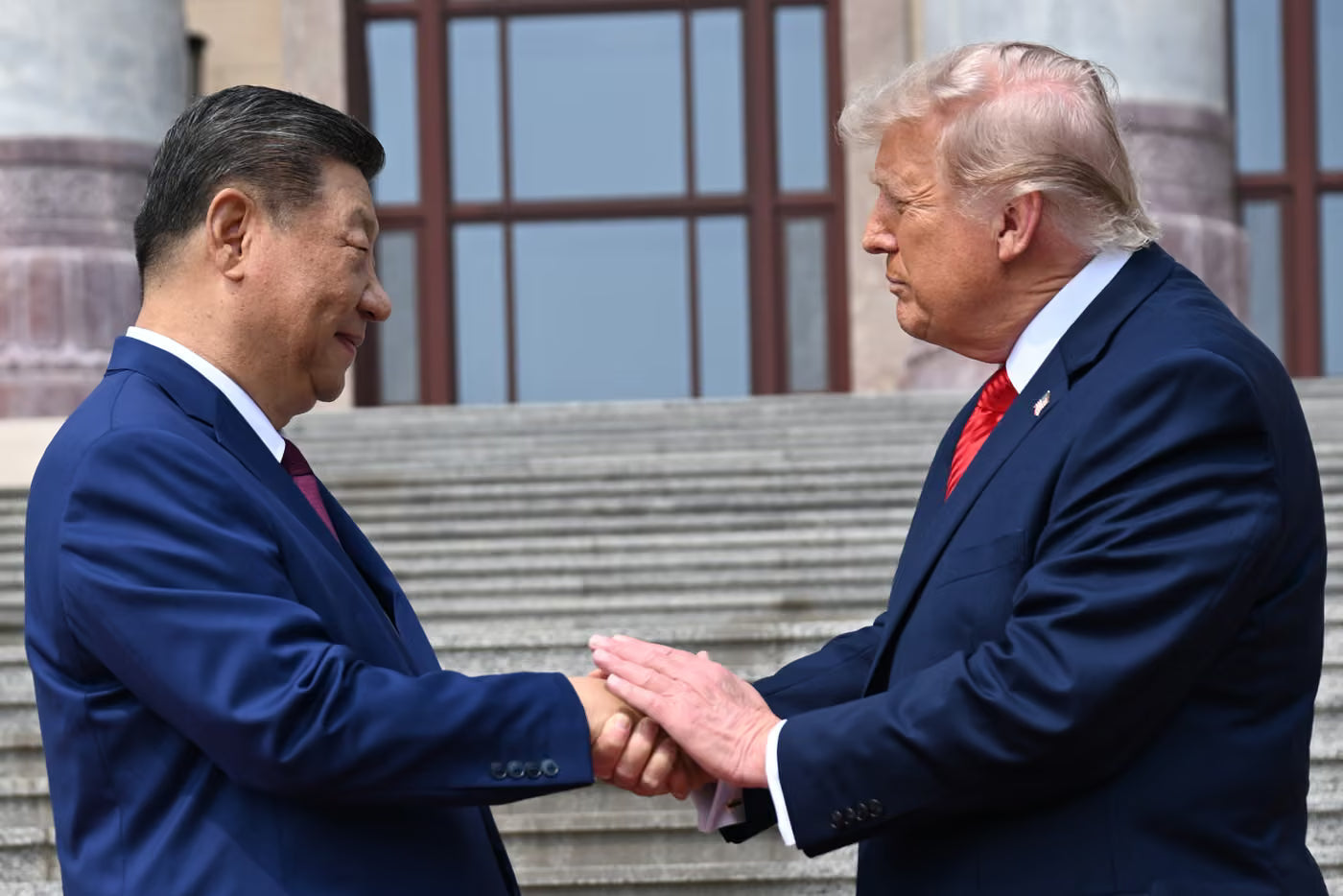
At the invitation of China, US President Donald Trump paid a state visit to China from May 13 to 15. This marks the first US presidential visit to China in nine years, as well as the highest-level face‑to‑face in-depth communication between China and the United States following the bilateral summit in Busan. The US delegation included cabinet heavyweights such as the Secretary of State, Secretary of Defense, United States Trade Representative, and core White House advisors, alongside 17 global business leaders from Boeing, Tesla, Goldman Sachs and other firms. Senior Chinese foreign affairs officials held corresponding meetings with the US side.
The two sides discussed macro‑level issues including China‑US bilateral relations, global economy and trade, and regional security. Topics such as aeronautical manufacturing, global supply chains, and cross‑Strait regional security are naturally linked to international shipping and ship trading industries, drawing close attention from global shipowners and ship traders.

Members of the US delegation in Beijing
China‑US Shipbuilding Competition in the Past Decade, Policy Barriers Continue to Escalate
During his first two presidential terms, the Trump administration took the lead in imposing trade restrictions in the shipbuilding sector. The subsequent US Shipping Act has become a landmark policy barrier in China‑US shipbuilding industry competition. Under the pretext of supporting domestic US shipbuilding and safeguarding maritime supply chain security, the Act introduces a series of exclusive provisions:
-
Restricting Chinese‑built vessels from entering the US domestic shipping market;
-
Imposing stringent access thresholds on cross‑border transactions of second‑hand oil tankers, bulk carriers, landing craft, multi‑purpose vessels and other ships;
-
Tightening compliance reviews for import and export of ship parts and components;
-
Reinforcing barriers to mutual recognition of classification society certifications;
-
Squeezing the global market space for Chinese shipbuilding enterprises through shipping subsidy policies.
In the years since the Act took effect, cooperation between China and the United States has continued to slow down in second‑hand ship circulation, new vessel exports, maritime survey services, ship supply chain support and other areas. Many international shipowners face additional compliance risks stemming from US trade policies when purchasing Chinese‑built ships, leading to regional fragmentation in the Asia‑Pacific ship trading market. Notably, the Act stipulates that within 15 years of its entry into force, 10% of all goods imported into the United States from China must be transported by US‑flagged vessels, with the proportion rising year by year, further heightening barriers to China‑US ship trade.
The Taiwan Question is Deeply Bound to the Shipping Industry, Affecting the Asia‑Pacific Shipping Pattern
As the most sensitive core issue in China‑US relations, the Taiwan question is deeply intertwined with the shipping industry, serving as an important implicit backdrop for the talks during Trump’s China visit. The Taiwan Strait, a vital global shipping corridor, handles over 40% of the world’s maritime trade volume. Bulk carriers, oil‑chemical tankers, container ships and various second‑hand merchant vessels frequently navigate this waterway, and waters around the Taiwan Strait directly determine market stability of Asia‑Pacific ship trading, safety of shipping routes, and efficiency of ship asset circulation. Cross‑Strait direct maritime shipping has maintained steady development for years with growing cargo volume, forming an integral part of the global maritime market.
The US has repeatedly engaged in geopolitical games over the Taiwan question, conducting military drills around the strait and interfering with regional shipping order, which directly impacts navigation safety and procurement confidence of international shipowners. Meanwhile, the US continues to sell military ships and supporting maritime equipment to Taiwan, further destabilizing the maritime environment around the Taiwan Strait and indirectly disrupting ship trade across the Taiwan Strait and surrounding regions. During this visit, China and the US are certain to exchange views on shipping control, navigation rules and maritime security consensus around the Taiwan Strait, so as to contain geopolitical divergences that disrupt the global ship trading market.

Trump’s China Visit: Four Directions for Cooperation and Risk Control in China‑US Shipping Industry
-
Negotiations over stability of global shipping supply chains. Both sides will communicate on international shipping capacity allocation, cross‑border circulation rules for second‑hand ships, and tariff barriers to ship imports and exports, seeking to ease unilateral restrictions imposed by the US Shipping Act.
-
Alignment of maritime standards and compliance systems. Discussions will be held regarding ship ballast water treatment systems (BWTS), ship safety regulations, international ship survey procedures, mutual recognition of classification society certifications, and compliance of ship trading documents, providing standardized references for international shipowners purchasing second‑hand ships and custom‑building new vessels.
-
Control of shipping security in the Taiwan Strait and Asia‑Pacific region. Clarifying navigation rules for vessels in the strait waterway to avoid negative impacts of geopolitical conflicts on ship transportation, second‑hand ship trading and ship asset valuation.
-
Management of economic and trade frictions in the shipbuilding industry. Negotiations on US shipping subsidies, ship access restrictions, technology export controls and other issues to reduce obstacles posed by policy barriers to the global expansion of Chinese shipbuilding and cross‑border ship trade.
China Boast Advantages in the Shipping Industry
Thanks to its complete shipbuilding industrial chain, mature second‑hand ship trading market and global maritime service network, China has long been a core choice for global shipowners procuring oil tankers, bulk carriers, oil‑chemical tankers, landing craft and other vessels.
The United States, by virtue of its discourse power in maritime policies and resources of domestic shipping giants, dominates the formulation of part of international shipping rules. Despite continuous suppression via policies such as the Shipping Act over the past few years, China’s shipbuilding sector has steadily expanded its footprint in overseas markets including Southeast Asia, the Middle East, Africa and Latin America by leveraging cost‑performance advantages, comprehensive after‑sales and ship survey services, and flexible cross‑border transaction models. The scale of second‑hand ship exports and ship parts trade has kept rising, cementing China’s position in the global ship trading market.

Xi Jinping shakes hands Donald Trump at the Great Hall of the People in Beijing. China Pool | Getty Images News | Getty Images
The high‑level dialogue window brought by Trump’s China visit creates an opportunity for China and the US to contain divergences and explore cooperation in the shipping industry. Against the backdrop of geopolitics around the Taiwan Strait and evolving global shipping landscape, communications between the two sides on maritime security, ship trade and shipping rules will directly shape future cross‑border flow of second‑hand ships, compliance requirements for ship imports and exports, and shipping capacity planning in the Asia‑Pacific region.
For global shipowners, ship traders and maritime service providers, timely tracking maritime policy signals released from this summit and accurately grasping shipping dynamics around the Taiwan Strait as well as changes in China‑US ship trading rules will enable more efficient layout of international ship procurement and second‑hand ship trading businesses, seizing development opportunities in the global ship trading market amid the complex international industrial environment.
( Keywords: US-China maritime summit 2026, US-China shipbuilding competition, US Shipping Act trade barriers, Taiwan Strait shipping security, Asia-Pacific ship trading market, second-hand vessel cross-border trade, maritime standard compliance alignment, global shipping supply chain stability, US-China ship trade friction, maritime classification certification mutual recognition)